
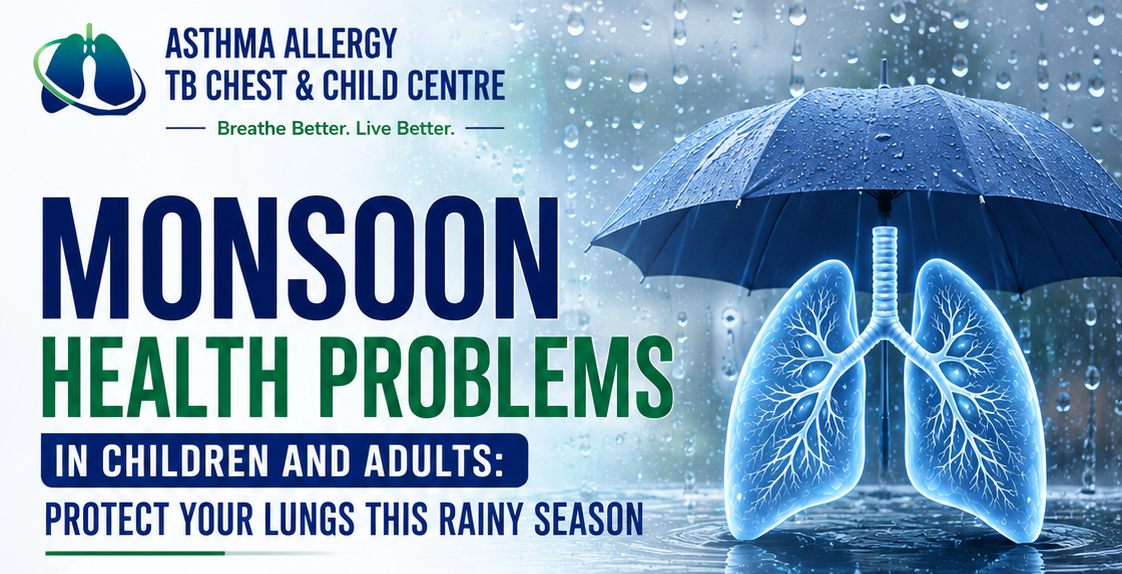
The monsoon season brings relief from the summer heat but also creates conditions that can increase the risk of respiratory infections, asthma, allergies and other lung problems in both children and adults. Increased humidity, dampness, mould growth, house dust mites, stagnant water and sudden changes in temperature can trigger cough, cold, wheezing, breathing difficulty and allergic symptoms. People with asthma, allergic rhinitis, recurrent chest infections, COPD, tuberculosis and other respiratory conditions need to be particularly careful during the rainy season.
Monsoon Respiratory Problems in Children
Children are more susceptible to respiratory infections during the monsoon because their immune systems are still developing and they are frequently exposed to infections at school and daycare. Viral respiratory infections, bronchitis, pneumonia, childhood asthma, allergic rhinitis and recurrent cough are commonly seen during this season. Children with asthma or allergies may develop increased wheezing, night-time cough, breathlessness or exercise intolerance when exposed to damp environments, mould, house dust mites or sudden temperature changes.
Parents should watch for persistent cough, fast breathing, wheezing, chest congestion, difficulty breathing, fever or reduced activity. A cough lasting for several weeks should not simply be considered a normal seasonal cough. Children with recurrent cough, recurrent pneumonia, wheezing or suspected childhood asthma may require detailed evaluation by a pediatric respiratory specialist.
Monsoon Respiratory Problems in Adults
Adults can also experience an increase in cough, asthma, allergic bronchitis, sinusitis, respiratory infections and breathing difficulties during the rainy season. High humidity can encourage mould and house dust mites, which are important triggers for people with respiratory allergies. Individuals with asthma, COPD, allergic rhinitis or previous lung disease may notice worsening symptoms during monsoon.
Adults should seek medical evaluation if cough persists, breathing becomes difficult, wheezing develops, fever continues, chest pain occurs or there is blood in the sputum. People with underlying lung disease should continue their prescribed treatment and inhalers rather than stopping medication when symptoms temporarily improve.
Mould, Dampness and House Dust Mites During Monsoon
Damp walls, leaking roofs, wet clothes and poorly ventilated rooms can promote mould growth. Mould spores can aggravate allergies and asthma and may cause cough, sneezing, nasal congestion, wheezing and breathing difficulty. House dust mites also thrive in warm and humid conditions. Keeping the home dry and well ventilated, fixing water leakage, regularly cleaning bedding and avoiding accumulation of damp materials can help reduce exposure to these triggers.
How to Protect Children and Adults During Monsoon
Simple precautions can reduce the risk of monsoon-related respiratory problems. Keep children and adults away from damp and mouldy areas, maintain good indoor ventilation and avoid exposure to cigarette smoke, incense and other respiratory irritants. Wash hands regularly, avoid sharing personal items during respiratory infections and maintain adequate hydration. Children with asthma should have their prescribed inhalers readily available, and parents should know how to recognise worsening asthma symptoms.
Good nutrition, adequate sleep and appropriate vaccination can also support respiratory health. If a child or adult develops persistent cough, recurrent wheezing, unexplained breathlessness or repeated chest infections, professional assessment is important rather than repeatedly using over-the-counter cough medicines.
When Should You Consult a Pulmonologist?
Persistent cough, recurrent wheezing, breathing difficulty, repeated pneumonia, uncontrolled asthma, chronic nasal allergy or recurrent chest infections should be properly evaluated. Depending on symptoms, assessment may include pulmonary function testing (PFT), spirometry, allergy testing, chest imaging and other appropriate investigations.
At Asthma Allergy TB Chest and Child Centre, Sector 63, Gurugram, Dr. Jasmeet K. Wadhwa, a leading pediatric and adult pulmonologist in Gurugram, provides specialist evaluation and management of asthma, allergies, respiratory infections, tuberculosis, chronic cough, wheezing and other lung diseases in children and adults.
The centre provides specialist care for childhood asthma, recurrent respiratory infections, allergic respiratory disease, chronic cough, wheezing and breathing problems, as well as respiratory conditions in adults.
If you or your child develops a cough or breathing problem that persists through the monsoon, timely evaluation can help identify the underlying cause and prevent recurrent respiratory symptoms.
Frequently Asked Questions
Can monsoon cause asthma attacks?
Yes. Increased humidity, mould, house dust mites, respiratory infections and sudden temperature changes can trigger asthma symptoms in susceptible individuals.
Why does my child keep coughing during the rainy season?
Recurrent viral infections, asthma, allergic rhinitis, house dust mite allergy, mould exposure and other respiratory conditions can cause repeated cough. Persistent or recurrent cough should be evaluated.
Does dampness increase allergies?
Yes. Damp environments can encourage mould and house dust mites, both of which can aggravate respiratory allergies and asthma.
When should a child with cough see a pulmonologist?
A child should be evaluated if the cough is persistent, recurrent, associated with wheezing or breathing difficulty, disturbs sleep, affects activity or is accompanied by repeated chest infections or pneumonia.
What tests are available for respiratory problems?
Depending on age and symptoms, evaluation may include PFT/spirometry, allergy testing, chest X-ray and other investigations as clinically indicated.
Can adults develop monsoon-related breathing problems?
Yes. Adults may experience worsening of asthma, COPD, allergies, sinus-related symptoms and respiratory infections during the monsoon.
Where can I consult a pediatric and adult pulmonologist in Gurugram?
Asthma Allergy TB Chest and Child Centre, Sector 63, Gurugram, provides specialist respiratory and allergy care for both children and adults under the care of Dr. Jasmeet K. Wadhwa.

Leave a Reply